
A strong IT project pitch leads with business outcomes, not technology. To get executive buy-in for an IT project in Brea, explain the business problem, how the project supports company priorities, and what success will look like. Executive buy-in means leadership agrees to support or invest in the project, so make its value clear to the people making the decision.
A promising technology idea alone is not enough. Leaders need to understand why it matters to the business and what it will take to deliver. A focused business case gives them a clear path from problem to decision.
Connect the project to business goals, define the capabilities it requires, and choose practical success measures. Shape the pitch around executive concerns so leaders can evaluate the proposal in terms of business outcomes.
Key Takeaways
- Build your business case around the challenge, the outcome you want, and how that result supports company goals.
- Shape the pitch to executive priorities, and explain how the initiative can help teams beyond IT.
- Identify the capabilities the project needs, then choose clear metrics that show whether it’s delivering value.
- Consider managed IT services when your project needs ongoing support to put technology plans into practice.
1. Building a business case around business outcomes
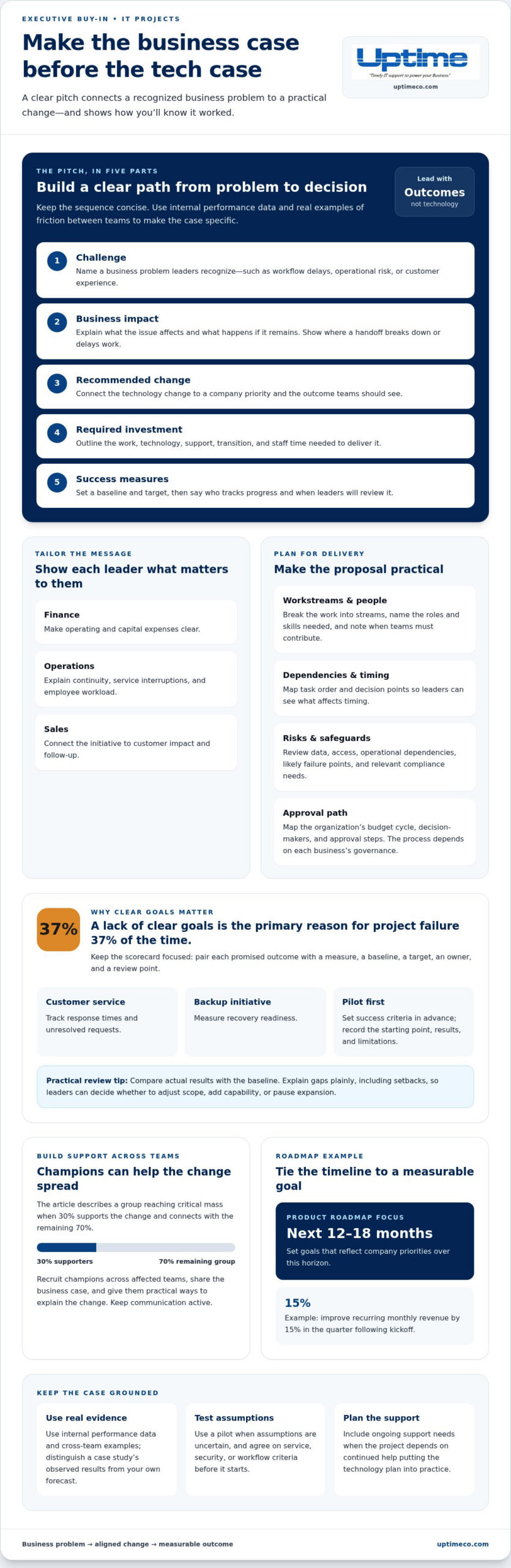
To get executive buy-in for an IT project in Brea, connect the proposal to a business problem leaders recognize. State the desired outcome, such as reducing workflow delays, lowering operational risk, or improving customer experience. Then show which company goal the change supports and how teams will see the difference.
Present the proposal in a concise sequence: challenge, business impact, recommended change, required investment, and success measures. Tailor the discussion to each leader’s responsibilities. A CFO may focus on operating and capital expenses, while a department head may care more about service interruptions or employee workload. Use internal performance data and examples of cross-team friction to make the case specific. For example, document where a handoff breaks down and the delays it creates.
Executives may resist proposals with unclear benefits, unmanaged risks, or unplanned demands on staff. Address those concerns directly. Explain what happens if the issue remains, what resources implementation requires, and how you’ll track progress. Invite questions before the approval meeting, then refine the business case using leaders’ feedback. This builds credibility and gives a potential champion a clear rationale to share.
For funding approval, map the project to your organization’s budget cycle, decision-makers, and approval steps. In Brea, the process depends on each business’s governance, not a single citywide IT approval route. Before including a grant or incentive opportunity in your plan, assess its eligibility, covered expenses, deadlines, and reporting terms.
Build support beyond the executive room, too. A change effort can reach critical mass when 30% of a group supports it; those supporters connect with the remaining 70%. Recruit employee champions across affected teams, share the business case, and give them practical ways to explain the change. Keep communication active to sustain momentum.
2. Aligning the IT or sales initiative with company priorities
Start with the organization’s stated priorities, then show how the initiative advances one of them. If leadership is focused on growth, explain how a sales system could improve customer follow-up. If productivity is the priority, connect the IT change to a specific workflow delay. To align a project with company strategy, link the strategic goal, technology change, and expected business outcomes. Gather input from affected department heads so the proposal reflects work beyond IT.
Make the plan tangible. Break the project into workstreams, identify the people and skills each requires, and map dependencies that affect timing. Estimate costs based on the work, technology, support, and transition involved; estimate the timeline from task order and decision points. For staffing, name the required roles and when each team member must contribute. This gives executives a practical view of trade-offs without relying on unsupported estimates.
Risk belongs in the strategy conversation, not in a footnote. Map the project’s data, access, operational dependencies, and likely failure points. Then describe safeguards, compliance needs, and the effects disruption could have on employees or customers. A cybersecurity review can surface security exposures, while compliance services can help assess relevant obligations. Show how each risk could affect organizational goals and what response could reduce its impact.
Before presenting, tailor the message to executive priorities: finance needs resource implications, operations needs continuity, and sales needs customer impact. A simple alignment table can connect each leader’s priority to a project outcome and measure. For help assessing security or compliance considerations, explore cybersecurity and compliance support as part of the planning conversation.
Product roadmaps should focus on goals that reflect company priorities for the next 12-18 months. For example, improving recurring monthly revenue by 15% in the quarter following a kickoff can make an initiative’s contribution clear.
3. Defining required capabilities and success metrics
Define what the project must do before choosing technology. Name the capabilities, such as secure access, reliable data sharing, or faster order processing, then assign an owner to each. Set a baseline and a target for every metric. Executives can then judge whether the change improves service, reduces risk, or supports the bottom line. The U.S. General Accounting Office notes that executive managers often require IT performance presentations focused on bottom-line results.
Choose measures that match the promised outcome. A customer-service project might track response times and unresolved requests; a backup initiative might measure recovery readiness. Discuss how each metric will be gathered, who reviews it, and when leadership sees progress. Keep the scorecard focused, and clearly separate early indicators from final results. A lack of clear goals is the primary reason for project failure 37% of the time.
Test uncertain assumptions with a pilot before expanding the project. Define success criteria in advance, such as whether the pilot meets agreed service, security, or workflow needs. Record the starting point, test results, and limitations. Share setbacks as well as wins. For example, if a data migration needs extra cleanup, explain why and how it affects the next decision.
Use a relevant case study to show the challenge, solution, and observed results, while distinguishing another organization’s experience from your own forecast. During reviews, compare actual metrics with the baseline and explain gaps plainly. That transparency gives executives useful choices: adjust scope, add capability, or pause expansion. For help connecting ongoing IT support with measurable outcomes, discuss managed IT services.
Frame business outcomes, required capabilities, and success measures in terms that matter to each executive. Clearly define the problem and set criteria that support executive buy-in.
Build confidence in delivery with successful past projects, case studies, and references from reputable clients. Product roadmaps should show how measurable market success can be achieved and use the same metrics to assess team success. Develop Agile implementation roadmaps with executive leadership, defining success and how it will be measured.
Uptime: Managed IT Services
Uptime Co. helps businesses put approved IT plans into practice through Managed IT Services. Turn to Uptime Co. when your team needs ongoing technology support to deliver a project and track its operational impact. Depending on the initiative, Cybersecurity Solutions, Cloud Services, or Network Infrastructure may also support the work.
Bring your business case, target outcomes, and success measures to the planning conversation. This gives the team a clear starting point for aligning technology work with your priorities. As the project moves forward, keep the measures visible so leaders can review progress and make informed decisions about next steps.
For an IT project in Brea, contact Uptime Co. to discuss the support your business needs.
Turn Executive Support Into Your Next Move
Leadership approval is the starting point, not the finish line. To get executive buy-in for an IT project in Brea, carry that support into implementation with clear ownership, timely decisions, and useful progress updates. Keep the business sponsor involved as priorities shift, and make it easy to raise obstacles before they slow the work.
When your team needs help turning an approved plan into practical next steps, Uptime offers Managed IT Services, Cybersecurity Solutions, and Cloud Services. The right support depends on your project’s goals and the capabilities your organization needs. Bring your priorities and project questions to a focused conversation, then decide on a path that fits your business.
Contact Uptime to discuss your project. Take the next step with a clear plan and build momentum from there.
Frequently Asked Questions
What is a Leadership Buy-In?
Leadership buy-in is an executive’s active commitment to help an initiative move forward. It goes beyond approving a proposal: the sponsor helps clear decision bottlenecks, keeps the project visible, and reinforces its importance with affected teams. For a Brea business, confirm who can authorize resources and who will communicate the change to employees before work begins.