
Not every small business needs a quarterly business review with a vCIO in Brea. But when technology decisions, security risks, or upcoming projects need direction, a review every three months can turn scattered updates into a clear plan. It looks back at how technology performed over the previous three months and sets priorities for what comes next.
Monthly IT reports still matter. They show what’s happening day to day, while a QBR connects those updates to business goals. If you’re weighing whether the meeting is worth the time, you’ll learn what a QBR aims to achieve, when a small business may benefit, and how strategic reviews differ from routine reporting. You’ll also see what to bring so the conversation leads to useful decisions, not just another stack of metrics.
Key Takeaways
- Use a quarterly review to turn recent IT performance into priorities and a practical plan for upcoming needs.
- Bring business decision-makers into the discussion so technology, security, projects, and goals stay aligned.
- Keep monthly IT reports focused on operational updates; use the QBR for broader decisions and forward planning.
- Match the review cadence to your firm’s needs, and focus the conversation on decisions that will move the business forward.
Do small businesses need quarterly reviews?
Not every small firm needs a formal quarterly meeting. It earns its place when three-month performance, upcoming decisions, and business goals need one clear conversation.
Retrospective Review and Forward Planning
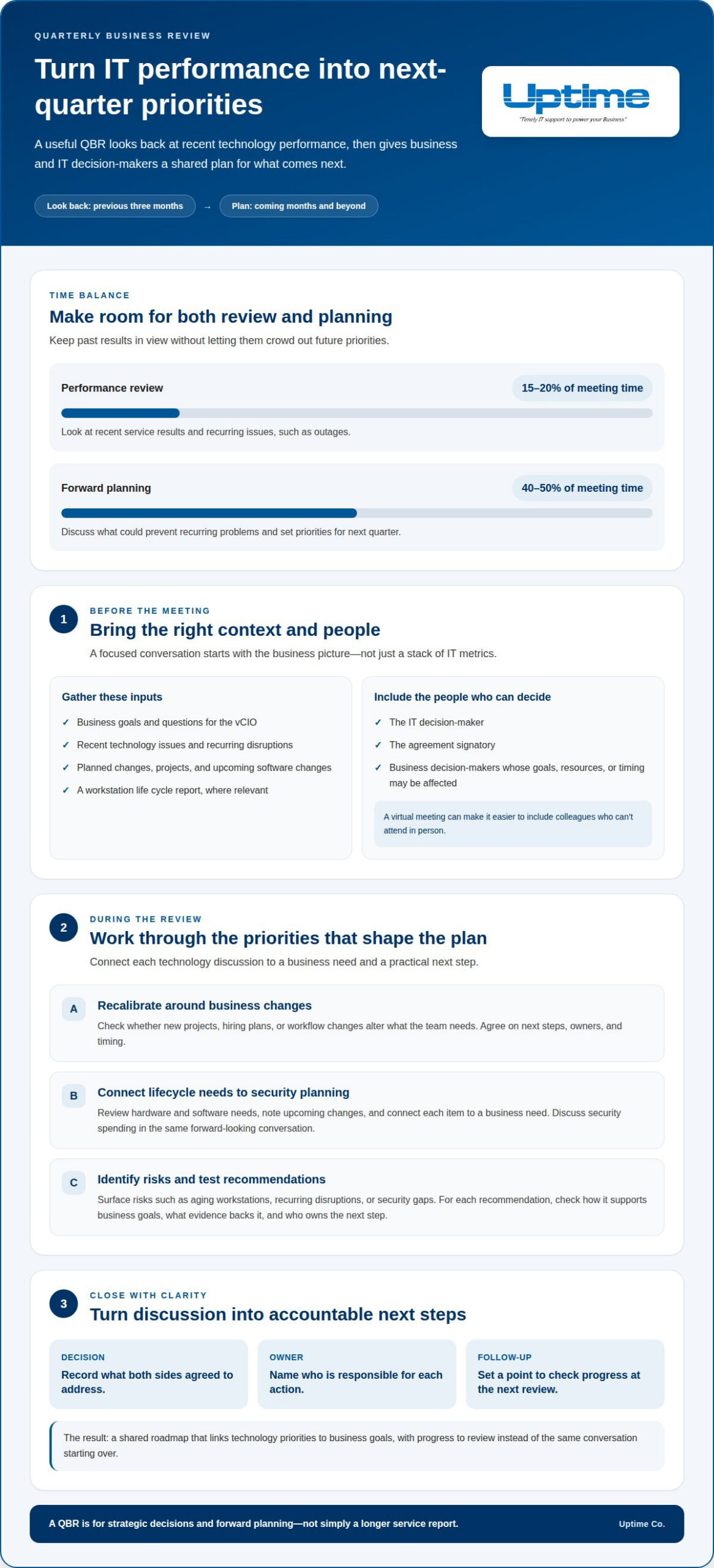
A QBR balances a three-month look back with planning for what comes next. This keeps past service results from crowding out future priorities. Set aside 15-20% of meeting time for performance and 40-50% for forward planning. For example, review recurring outages, then discuss what could prevent them next quarter.
Strategic Recalibration and Next-Quarter Planning
Strategic recalibration connects technology plans to changing business goals. It matters when a new project, hiring plan, or workflow shift changes what the team needs. Bring decision-makers together to agree on next steps, owners, and timing. A virtual meeting can include colleagues who can’t attend in person.
Technology Lifecycle and Security Budget Planning
Lifecycle planning tracks hardware and software needs alongside security priorities. It helps teams schedule replacements and budget discussions before aging equipment or changing security needs disrupt plans. Review a workstation life cycle report, note upcoming software changes, and connect each item to a business need. Then include security spending in the same forward-looking conversation.
Review Preparation and Risk Identification
Before the meeting, gather business goals, recent technology issues, planned changes, and questions for the vCIO. Include the IT decision-maker and agreement signatory so the right people can shape the plan. The vCIO can identify risks such as aging workstations, recurring disruptions, or security gaps. In Brea, assess recommendations by checking how they support business goals, what evidence backs them, and who owns each next step.
QBR purpose and customer-success outcomes
A QBR connects technology performance with business priorities. Its value comes from turning context into clear outcomes, owners, and next steps.
QBR Definition and Purpose
A quarterly business review is a strategic meeting between a business’s decision-makers and its managed service provider. It examines the current state of technology, reviews progress, and sets priorities for the coming months and beyond. This gives leaders a shared roadmap instead of disconnected updates. A useful review ties each recommendation to a business need and a clear action.
Customer-Success Outcomes
Customer-success outcomes are practical improvements that both sides can track after the meeting. For example, leaders might agree to address recurring disruptions before a planned workflow change. Record the decision, assign an owner, and set a follow-up point. This creates accountability and helps the next review assess progress instead of reopening the same conversation without new context.
IT-Business Alignment
IT-business alignment means technology priorities directly support the organization’s goals. If a business plans to add a service or change how staff work, the roadmap can address the systems, security, and support needed. Invite business and IT decision-makers to explain their priorities. Their shared context helps shape achievable next steps and makes trade-offs visible before projects move forward.
QBR Formats
A QBR can be an in-person or virtual meeting, supported by a concise report, roadmap, or presentation. Choose a format that lets decision-makers review performance and discuss priorities together. Unlike an executive business review, which may happen annually or biannually and focus on longer-term strategy, a QBR keeps attention on operational performance and near-term planning. For a focused strategic IT planning conversation, connect recommendations to business outcomes and named owners.
How is a QBR different from a monthly IT report?
A monthly IT report gives a status snapshot; a quarterly business review turns patterns into decisions. In a QBR, the vCIO discusses technology performance, security, business goals, priorities, and upcoming work. That makes the meeting strategic, not simply a longer review of service activity.
A useful QBR adapts to the customer’s business. The vCIO connects the discussion to its goals, services, and contract, then presents relevant performance measures and open actions. For a small business, topics might include recurring support issues, cloud plans, compliance priorities, and project progress. Ticket counts can sit in an appendix; the main conversation should focus on what those trends mean and what happens next.
Bring leadership into the discussion when decisions affect business direction, resources, or timing. A vCIO can summarize performance, identify risks and dependencies, map recommendations to owners, and set next steps. Useful measures include ticket patterns, progress against agreed actions, and service trends tied to business priorities. Discuss the context behind each metric, not just its status.
The cadence also separates a QBR from an executive business review. QBRs typically focus on operational performance and near-term planning. EBRs may happen annually or biannually, with more attention on longer-term strategy. A vCIO connects those rhythms, so quarterly actions support broader business goals. If you need help aligning technology priorities with daily operations, explore managed IT services as a practical next step.
Uptime: IT Consulting & vCIO
Uptime helps small businesses connect technology decisions with practical business priorities through IT Consulting & vCIO services. Turn to this support when a review surfaces decisions about security, cloud planning, or network infrastructure, or when your team needs a clearer view of upcoming IT priorities.
Uptime can bring those priorities into focus through Managed IT Services, Cybersecurity Solutions, Cloud Services, and Network Infrastructure. Start with the challenge your business needs to address, such as aligning technology plans with growth or deciding which security concerns need attention first. That keeps the conversation grounded in your goals, not a generic technology checklist.
Contact Uptime to discuss your business’s IT priorities and vCIO needs.
Make Your Next IT Decision Count
Your next review can do more than set an agenda. Use a quarterly business review with a vCIO in Brea to choose a business priority that technology should make easier, then turn it into a decision, an owner, and a clear next step. Keep the conversation focused on progress your team can recognize.
As you plan a quarterly business review with your Brea vCIO, connect that priority to the support your business needs, whether it involves Managed IT Services, Cybersecurity Solutions, or Cloud Services. Bring your most pressing business goal to the conversation and shape the next move around it.
Contact Uptime Co. to plan your next QBR and take a clear, confident step forward.
Frequently Asked Questions
How long should a QBR take?
A typical QBR lasts 45-60 minutes. Keep it focused by sharing an agenda beforehand, grouping related decisions, and reserving time for leadership questions. If a technical issue needs detailed troubleshooting, capture it as a separate follow-up rather than letting it take over the strategic discussion. The meeting should leave participants clear on decisions and ownership.
What Are the Best Practices for Effective QBRs?
Start with business priorities, then use relevant service and security information to guide the discussion. Invite the people who can explain operational needs and approve decisions. Keep supporting metrics available without making every chart a discussion topic. Before closing, record each agreed action, its owner, and the next point for reviewing progress. This gives the conversation a useful outcome.
What Are the Biggest Benefits of QBRs?
QBRs give business leaders a dedicated opportunity to discuss whether technology plans still fit how the organization operates. For example, a team preparing to change its customer workflow can surface dependencies before setting a launch plan. The discussion can clarify priorities, expose trade-offs, and help decision-makers coordinate work across business and IT teams.
What Is a QBR With Your MSP?
A QBR with your managed service provider is a planning conversation about the technology supporting your organization. It can connect service trends with upcoming projects, security concerns, and business decisions. For example, if a department needs a new workflow, the meeting can identify technology dependencies and agree who will coordinate the next planning step.
What Is the Purpose of a QBR?
The purpose is to create a regular decision point for technology priorities, rather than letting plans drift between operational updates. Use the discussion to clarify which recommendations deserve attention, what business need each one serves, and what information leaders still need. That context helps the team make informed choices about projects and planning.